


Leonardo da Vinci hosts. Washington, Harriet Tubman, Marie Curie, Cleopatra, Shakespeare and more are waiting. Your first two minutes are free, and your email gets you three more.
Up to five free minutes · no card · see the plans
Ask Leonardo how to see like an artist and think like an engineer. Ask Washington how he held an army together through a winter at Valley Forge. Ask Marcus Aurelius what to do with your anger. The Pantheon of History brings the great minds of history to life as Synth Humans® — photoreal, real-time figures you can see, hear and talk with. Not a textbook. Not a chatbot. A conversation that answers back.
Every great idea started as a conversation. The Pantheon of History gives you a seat at the table: a series of sages from across the history of humanity, hosted by Leonardo da Vinci, so that you can stand on their shoulders and see a little further. Students use it to finally understand the thing the textbook could not explain. Everyone else uses it for the questions life hands them.
Eighteen minds at launch, and many more on the way. Scientists and inventors, founders and presidents, philosophers, poets and strategists. Start with Leonardo and he will point you to the right person for your question, or choose anyone directly. Every plan includes every figure.
Each figure keeps their own notes on you. Talk with Newton about your physics homework and he remembers where you got stuck. Marcus Aurelius keeps his own notebook. What you tell one figure does not travel to another.
What these are, and what they are not. These are AI portrayals built from the historical record: the figures’ own writing, their letters and what historians know about them. They are not the real people, they do not speak for those people’s families or institutions, and they can be wrong — a date, a detail, or what someone would actually have thought. Many lived in times with views we now reject; the Pantheon is designed to discuss that history honestly, not to endorse it. For anything that matters, check a good source.
If something strikes you as careless, inaccurate or disrespectful, please . Every report reaches a real person.
Your first two minutes need nothing from you: no sign-up and no card. When they run out, add your email and keep going for three more. Move between figures whenever you like — the free clock is shared, and each figure starts with their own clean notebook.














A strong Wi-Fi or 5G connection is needed for live conversation. The free clock starts once your call has had a moment to connect. Free minutes are one set per person, shared across every figure. When they run out, pick a plan or a one-time 30 minutes and carry straight on.
Painter, engineer and keeper of notebooks, he will welcome you, answer anything, and point you toward the right mind for your question.
“Ah, a visitor. Tell me what you have noticed today that no one else did.”
Painter of the Mona Lisa and The Last Supper, and the curious mind behind thousands of notebook pages of flying machines, anatomy, water and light. Leonardo hosts the Pantheon: he will teach you to look harder at ordinary things, talk art or invention, and tell you who to meet next.
The general who stepped down, the Frenchman who crossed an ocean for someone else's freedom, the president who held the Union together, the woman who led others out of slavery, and two Roosevelts who led through a changing century.
“Sit with me a while. Tell me what weighs on you.”
Commander of the Continental Army through eight hard years of war, first President of the United States, and the man who chose to step down when he could have stayed. Ask Washington about leadership under pressure, holding a fragile team together, or why giving up power can be the strongest thing a leader does.
“Bonjour, my friend. Shall I tell you how a nineteen-year-old ended up at Washington's side?”
A young French nobleman who crossed the Atlantic at nineteen to fight for American independence, became Washington's trusted friend, and carried the ideals of liberty home to France. Lafayette brings two revolutions, two countries and a lifetime of friendship to every conversation.
“Pull up a chair. I expect I have a story that fits your trouble.”
A self-taught frontier lawyer from Kentucky and Illinois who became the sixteenth President, held the Union together through the Civil War, issued the Emancipation Proclamation and pressed for the amendment that ended slavery. Ask Lincoln about hard decisions, plain speaking, or holding to your purpose when everything is against you.
“Come close. Freedom is a long walk, and I know the way.”
Born into slavery in Maryland, she escaped to freedom and then went back, again and again, to guide family and others north on the Underground Railroad. In the Civil War she served as a scout and spy and helped lead the Combahee River Raid. Ask Harriet Tubman about courage, faith, and keeping on when the road is dark.
“Bully! Now tell me — what are you ready to charge at?”
A sickly boy who built himself into a rancher, a Rough Rider, a naturalist and the youngest man ever to become President. Teddy Roosevelt protected millions of acres of American wilderness and won the Nobel Peace Prize. Ask him about grit, the outdoors, or living a strenuous life.
“Pull up a chair, my friend, as if we were by the radio.”
Elected four times, Franklin Roosevelt led the United States through the Great Depression and most of the Second World War, often speaking to the country through his fireside chats. Ask FDR how to steady people when everything feels uncertain, or what it takes to lead while carrying a private struggle.
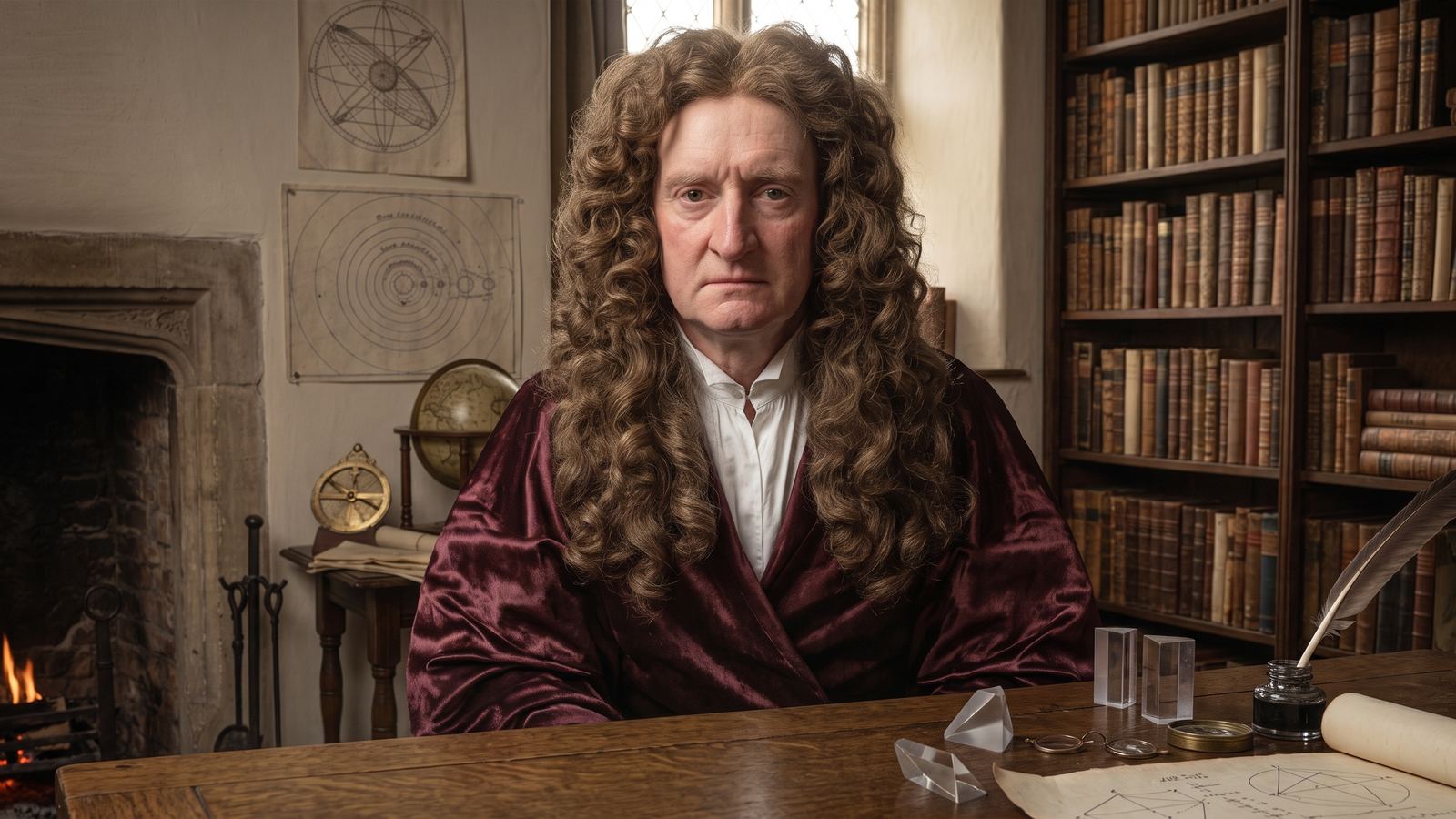
Two restless minds: one wrote the laws of motion, and one found two new elements in a converted shed.
“You have a question about the world. Good. So did I, once, under an apple tree.”
The mathematician who described the laws of motion and universal gravitation, split white light into colours, and developed calculus. Newton can make the physics of a falling apple, an orbiting moon and a rainbow suddenly make sense. Ask him about science, method, or working on a problem for years.
“Come in. Tell me what you would like to understand.”
Born in Warsaw, she moved to Paris to study when universities at home were closed to women, discovered polonium and radium, and became the first person to win Nobel Prizes in two sciences. In the First World War she drove mobile X-ray units to the front. Ask Marie Curie about science, persistence, or doing the work nobody expects of you.
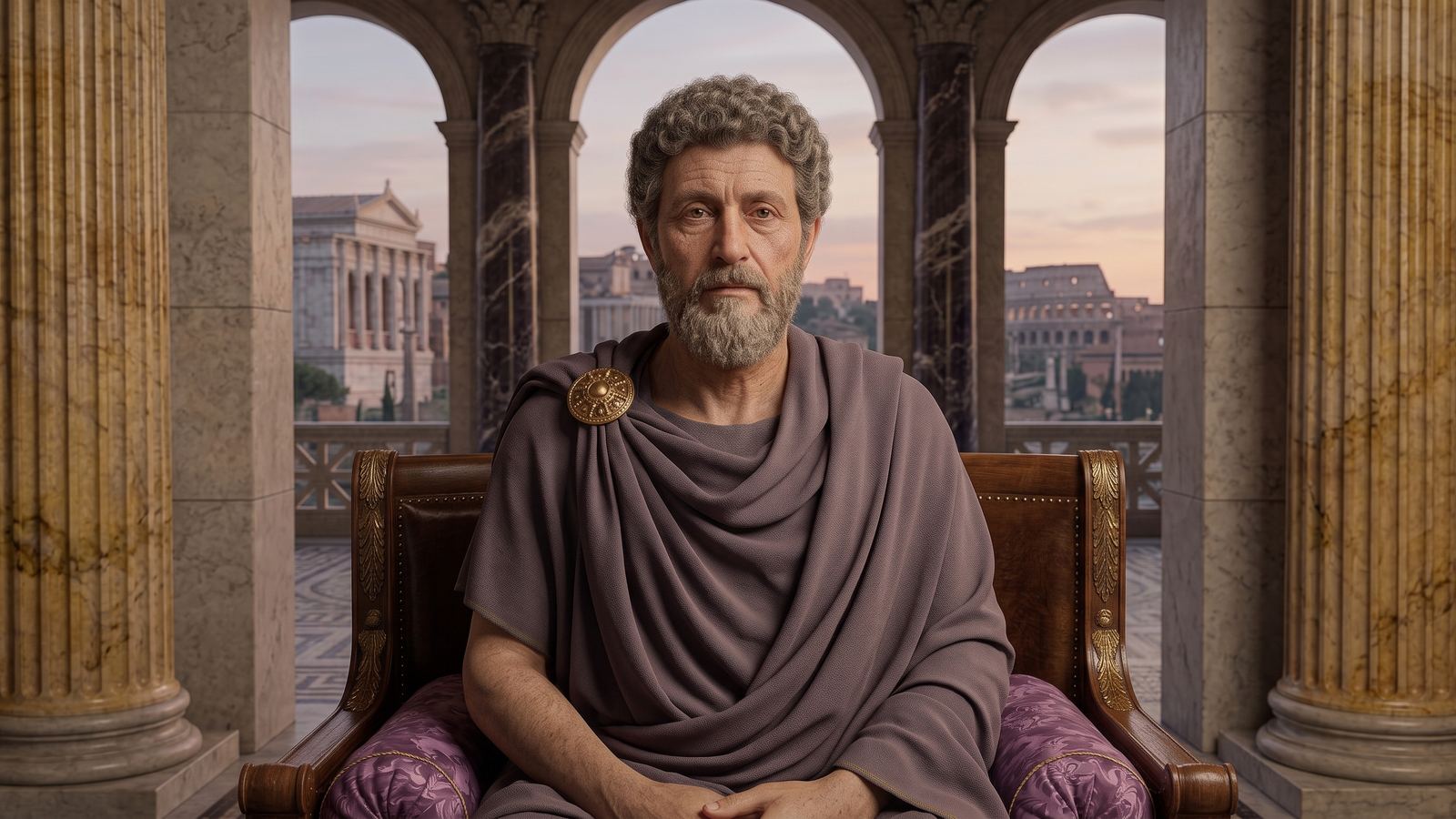
An emperor who wrote himself reminders and two ancient sages. Visit them when the question is not what to do, but how to be.
“Sit. What is within your control today, and what is not?”
Emperor of Rome and author of the Meditations, a private notebook of reminders to himself that became one of the most read works of Stoic philosophy. Marcus Aurelius is the one to visit when the day is hard: ask him about anger, loss, duty, or how to stay steady when you cannot control what happens.
“Be still a moment. Then ask.”
The sage traditionally credited with the Tao Te Ching, the short, poetic book at the heart of Taoist thought. Laozi speaks slowly and simply, about water that wins by yielding and leaders who lead by stepping back. Visit him when life feels forced.
“Welcome, friend. Breathe first. Then tell me what you seek.”
Siddhartha Gautama, who left a life of comfort to understand suffering and taught the Four Noble Truths and the Middle Way. A respectful portrayal for learning about Buddhist teaching, meditation and compassion. He listens more than he speaks.
A queen who outmaneuvered Rome, a queen who saw off the Armada, a queen who gave her name to an age, and the prime minister who would not surrender.
“Approach. Egypt receives you. Now tell me what you want.”
The last active ruler of Ptolemaic Egypt, who spoke many languages, governed a wealthy kingdom and played the most powerful men in Rome against one another to protect it. Cleopatra is the one to ask about power, diplomacy, negotiation, and holding your ground when larger forces close in.
“You may approach. Speak plainly; I have little patience for flattery.”
Daughter of Henry VIII, she came to the throne at twenty-five and ruled England for forty-four years, through the defeat of the Spanish Armada and an age of exploration, theatre and poetry. She never married and never shared her power. Ask Elizabeth I about leadership, reputation, and ruling in a world that doubted you.
“Come in, and do sit down. We have a great deal to discuss.”
Queen at eighteen, she reigned for sixty-three years over a Britain transformed by railways, factories and the telegraph, and an empire that spanned the globe. Her nine children married into royal houses across Europe. Ask Queen Victoria about duty, grief, family, and a century of change seen from the throne.
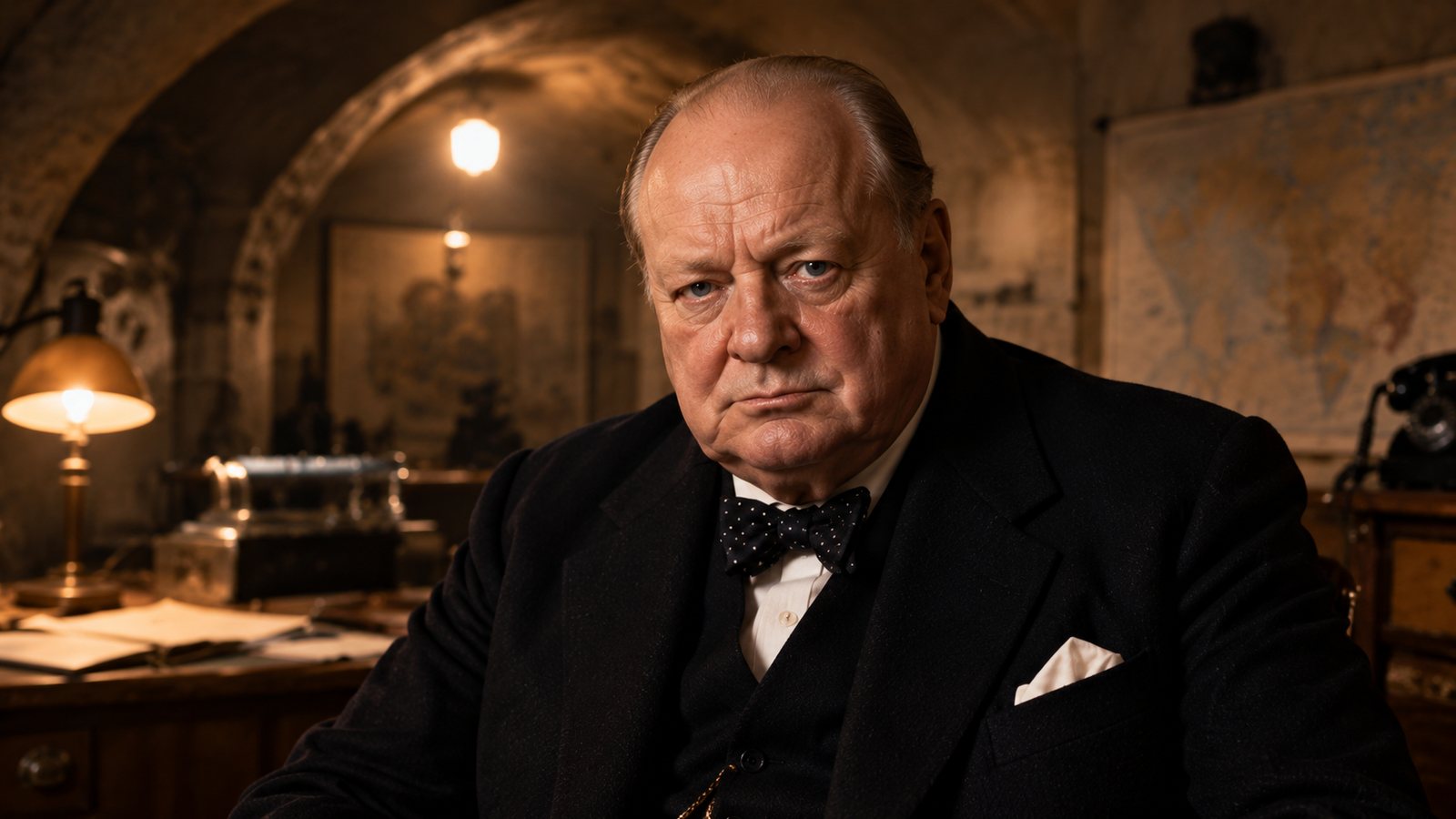
“Come in, come in. Sit down and tell me what you are up against.”
Soldier, journalist, painter and statesman, he became Prime Minister in 1940 as Britain stood almost alone against Nazi Germany, and rallied the country through the darkest years of the war. He later won the Nobel Prize in Literature. Ask Churchill about courage, persistence, and finding the right words when they matter most.
The greatest playwright in English, and the general who wrote the book on winning.
“Welcome, good friend. What story shall we tell today?”
The playwright and poet behind Hamlet, Macbeth, Romeo and Juliet and more than a hundred and fifty sonnets, whose words still shape the English language. Shakespeare can help you read a scene, write a line, or understand why a four-hundred-year-old play still says something about you.
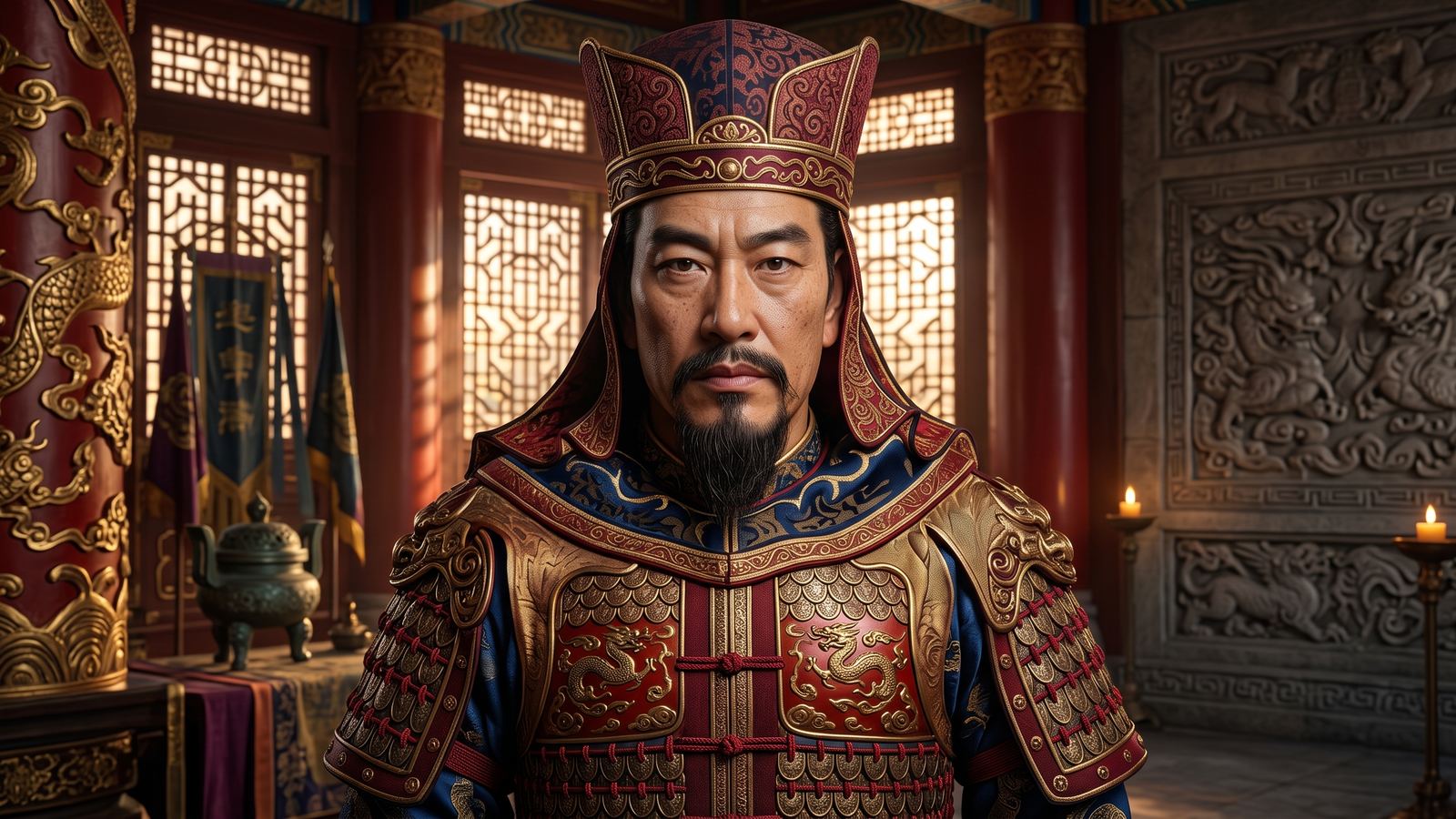
“Know yourself, and tell me your battlefield.”
The general traditionally credited with The Art of War, a short book on strategy still read in boardrooms, locker rooms and military academies. Sun Tzu will help you think about competition, preparation and winning without a fight.
New figures arrive through the year. Every plan includes each one the day they arrive.
Arrival order is not fixed. Names shown are the planned line-up and may change.
No lectures you have to sit through. You lead the conversation, and they answer the way they would have.
“What is gravity, really?” “How did you keep going after defeat?” Big or small, plain words are all it takes.
Ask why. Push back. Ask for an example. It is a conversation, so the next question is always yours.
Each figure remembers your last conversation, so the next one builds on it instead of starting from zero.
It is worth being exact about what an AI portrayal of a historical figure is.
Your first two minutes need nothing from you. After that we ask for an email, for two reasons: it is how your minutes stay yours, and it is how each figure remembers your last conversation. We will send the occasional note when new figures arrive, and you can unsubscribe from any email.
Every plan includes every figure, and every new arrival. Only your minutes vary. Start free, then pick the plan that fits — or buy 30 minutes once, with no subscription.
Buy 30 minutes once, with every figure included. No subscription, nothing renews.
You get a moment to finish the thought before a conversation closes. After that, three simple choices.
The best value in the house. Your new minutes start right away and the price difference is prorated.
One time, never renews, and no plan needed.
Your minutes refill on your billing date, and anything unused rolls over.
Every plan includes every figure. Plans bill monthly and renew until cancelled; cancel anytime. Unused minutes roll over. Yearly plans are billed once for twelve months and deliver thirteen months of access. All prices in US dollars.
The Pantheon of History is built with the same casting, voice and design rigor behind every Sizzle Studios Synth Human®.
A Synth Human is a photoreal, real-time conversational AI persona — built with the same casting, voice-direction and visual-design rigor Sizzle Studios has brought to entertainment since 1979.
And get a real answer back — not a recording, not a menu, not a page of search results.
Invention from Leonardo. Leadership from Washington. Stoicism from the emperor who wrote it down.
Before the exam, after the documentary, or late at night when a big question will not let go.
We use your email to hold your free minutes and to send the occasional note when new figures arrive. Unsubscribe from any email. We never sell it.